

Choosing between the 2026 Corvette Stingray, 2026 Corvette Z06, and 2026 Corvette E-Ray is not about selecting the “best” Corvette. It is about selecting the Corvette that aligns with how you actually plan to drive. Many shoppers ask which Corvette they should buy, and the answer depends on how each model delivers performance, how it behaves under different conditions, and what tradeoffs come with its engineering.
Each Corvette is built around a different performance philosophy. The Corvette Stingray focuses on balance and everyday usability. The Corvette Z06 is engineered for track-focused precision and sustained high-performance driving. The Corvette E-Ray introduces hybrid all-wheel drive to expand traction, acceleration consistency, and real-world versatility.
Understanding these differences requires looking beyond horsepower and into how each system works in real driving conditions.
How Stingray, E-Ray, and Z06 Deliver Performance Differently
The 2026 Corvette Stingray V8, 2026 Corvette E-Ray hybrid AWD system, and 2026 Corvette Z06 high-revving V8 each produce power in a way that changes how the car feels from the driver’s seat.
The Corvette Stingray V8 delivers power through a naturally aspirated engine that builds output progressively as engine speed increases. This creates a predictable throttle response that is easy to manage in both daily driving and spirited acceleration. The power delivery is smooth and controlled, which makes the Stingray approachable without limiting performance capability.
Read the rest of this entry »Performance in the C8 Corvette is not defined by peak output alone. It is defined by how consistently that performance can be delivered under sustained load. Many shoppers researching Corvette engineering ask how the cooling system actually works and why it becomes more complex in higher-performance models. The answer is that thermal management is not a single component. It is a coordinated system designed to control heat across the engine, transmission, brakes, and, in the case of the E-Ray, hybrid components.
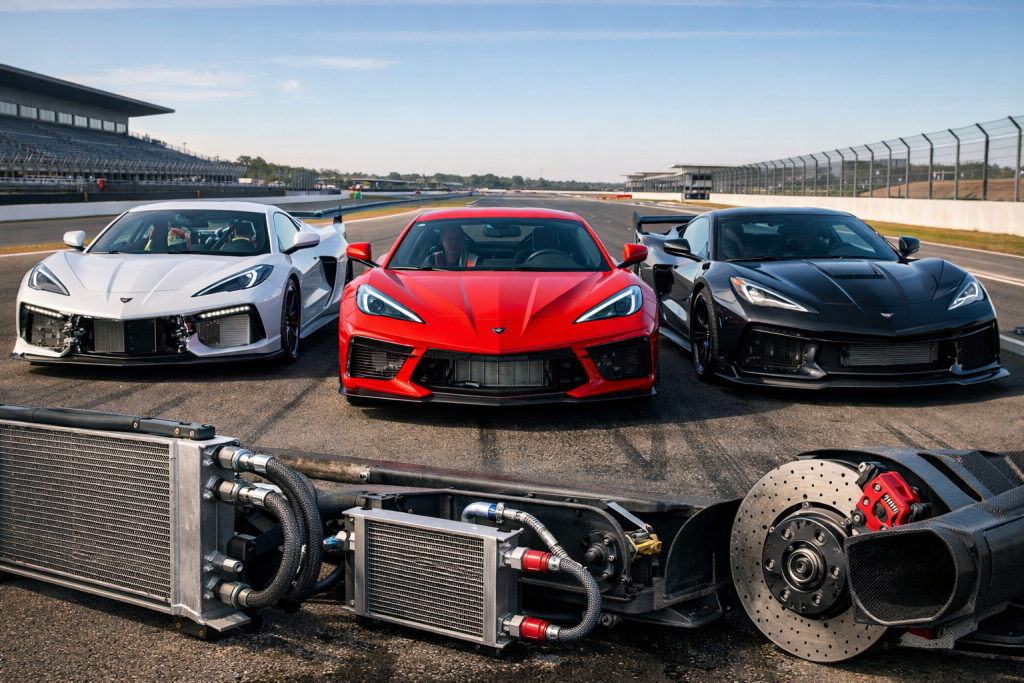
Thermal management is the system a performance car uses to regulate temperature across all major mechanical and electronic systems so they can operate within optimal ranges. In the 2026 Corvette Stingray, 2026 Corvette Z06, and 2026 Corvette E-Ray, that system is engineered differently because each model generates heat in different ways and at different intensities.
How the Corvette Cooling System Works as a Complete Network
The Corvette cooling system operates as a distributed thermal network rather than relying on a single radiator. Many drivers ask how the Corvette cooling system works under aggressive driving, and the key is that multiple subsystems are working at the same time to move heat away from critical components.
The Corvette cooling system includes front-mounted radiators, auxiliary heat exchangers, coolant circuits, and airflow channels that are all coordinated to manage temperature across the vehicle. Engine coolant absorbs heat from the combustion process and transfers it to the Corvette radiators, where passing air removes that heat. At the same time, separate fluid systems regulate oil and transmission temperatures through dedicated heat exchangers.
Read the rest of this entry »Aerodynamics plays a defining role in how modern Corvettes perform, especially as speed increases and mechanical grip alone is no longer enough to maintain control. Many shoppers exploring the 2026 Corvette lineup want to understand how aerodynamic systems actually work, what downforce does in real driving, and how different configurations like the Stingray, Z06, and Z07 package change performance. The answer lies in how the Corvette uses airflow as a functional tool, shaping and directing it to increase stability, improve cornering grip, and maintain control at high speeds.

How Corvette Aerodynamics Manage Airflow at Speed
Many shoppers ask how aerodynamics affect Corvette performance and what actually happens to air as it moves across the vehicle. The 2026 Corvette Stingray aerodynamics system is designed to manage airflow across three primary zones: over the body, under the vehicle, and through internal channels.
At speed, air interacts with the Corvette’s surfaces in ways that directly influence stability. The Corvette front fascia directs incoming air through intakes that cool components while guiding excess airflow around the body. At the same time, the underbody is shaped to accelerate airflow beneath the car, reducing pressure and helping pull the vehicle closer to the ground.
Key airflow behaviors include:
Read the rest of this entry »The 2026 Corvette E-Ray introduces a fundamental shift in Corvette performance by integrating an all-wheel drive system into a platform historically defined by rear-wheel drive dynamics. Many shoppers exploring the Corvette E-Ray want to understand how this hybrid AWD system actually works, how it changes acceleration and handling, and whether it enhances or alters the driving experience. The answer lies in how the Corvette E-Ray combines a traditional V8 engine with an electric motor to deliver power in a way that improves traction, responsiveness, and real-world usability without sacrificing performance identity.
How the Corvette E-Ray AWD System Works
Many shoppers ask how the Corvette E-Ray AWD system actually works and how a hybrid setup can power all four wheels. The 2026 Corvette E-Ray AWD system uses a dual propulsion architecture that separates power delivery between the front and rear axles.
The Corvette E-Ray pairs a naturally aspirated V8 engine driving the rear wheels with an electric motor mounted on the front axle. Unlike mechanical AWD systems that rely on driveshafts and transfer cases, the Corvette E-Ray AWD system uses electronic coordination between these two power sources.
This means:
Read the rest of this entry »Pre-Owned Chevrolet Corvette C7 vs Chevrolet Corvette C8 Performance and Ownership Differences
For performance shoppers exploring pre-owned Corvettes, the C7 and C8 represent two fundamentally different engineering philosophies. The C7 is the final evolution of the traditional front-engine Corvette. The C8 introduces a mid-engine layout, dual clutch transmission, and structural redesign that redefined the platform.
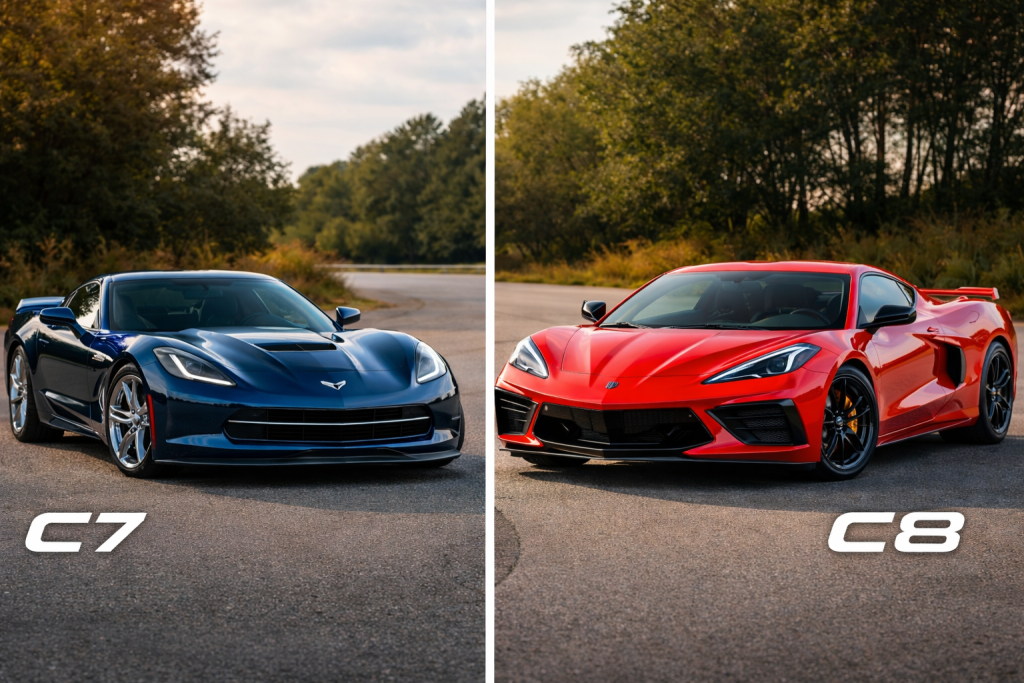
Choosing between them requires understanding architecture, performance behavior, transmission differences, reliability considerations, and long-term ownership dynamics.
Front-Engine vs Mid-Engine Architecture
C7 Corvette:
- Front-engine layout
- Rear-wheel drive
- Rear-mounted transaxle for improved balance
- Traditional Corvette proportions
C8 Corvette:
Read the rest of this entry »The 2026 Corvette Z06 is defined by its engine. While every C8 Corvette shares a mid-engine layout, the Z06 introduces the LT6, a naturally aspirated 5.5L V8 engineered with race-derived architecture. This is not a modified version of the LT2 found in the Stingray. It is a fundamentally different mechanical design built to sustain extreme RPM and deliver exotic-level response.
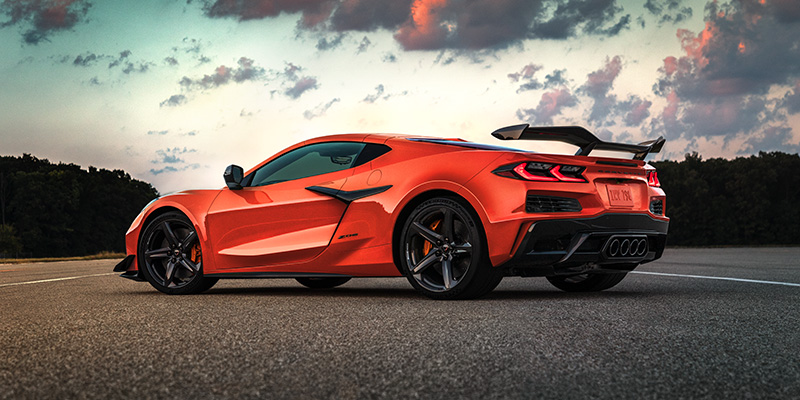
For performance-focused buyers, understanding how the LT6 operates clarifies why the Z06 occupies a distinct tier within the Corvette lineup.
LT6 Engine Architecture
At the core of the Z06 is the 5.5L LT6 V8.
Key Specifications:
- Naturally aspirated
- Flat-plane crankshaft
- Dual overhead camshaft design
- 32 valves
- Dry sump lubrication
- Titanium connecting rods
Output:
Read the rest of this entry »The 2026 Corvette Stingray and E-Ray share the same mid-engine LT2 foundation, but they deliver power differently. One is a pure rear-wheel-drive expression of naturally aspirated V8 balance. The other adds an electric front axle, transforming traction strategy and launch consistency.
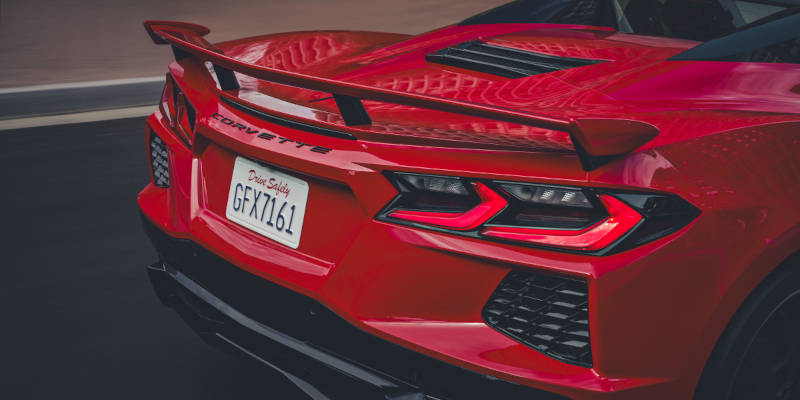
For buyers comparing these two Corvettes as real-world sports cars, the question is not simply which is faster. It is how drivetrain architecture affects daily drivability, traction confidence, ride behavior, and handling character.
Shared LT2 Foundation
Both Stingray and E-Ray use the 6.2L LT2 naturally aspirated V8 mounted behind the driver.
Common performance architecture:
- Mid-engine layout
- Eight-speed dual clutch transmission
- Lightweight aluminum structure
- Magnetic Ride Control availability
- Rear limited slip differential
This shared platform means cabin ergonomics, seating position, steering layout, and base suspension geometry are fundamentally similar.
Where they differ is how torque reaches the pavement.
Read the rest of this entry »The 2026 Corvette E-Ray is not simply a Corvette with added electric power. It is the first electrified, all-wheel-drive Corvette engineered around torque deployment strategy. The hybrid system is designed specifically to enhance launch control performance, improve traction consistency, and deliver repeatable sub three second acceleration.
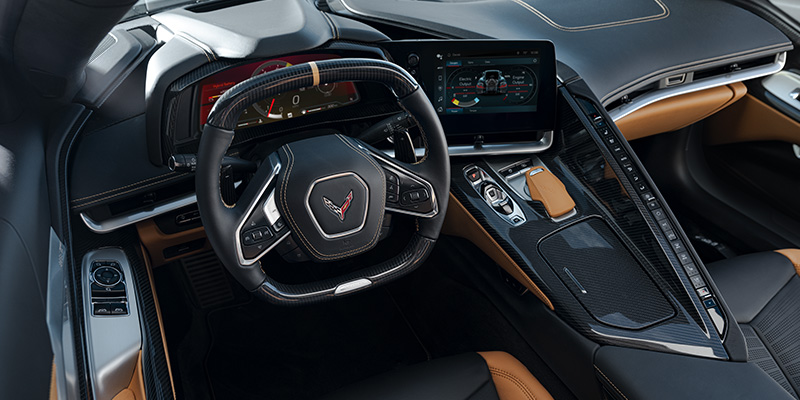
Understanding how electric assist integrates with launch control requires examining system architecture, torque distribution, battery placement, and traction management logic.
Core Powertrain Architecture
The E-Ray combines two propulsion systems:
Rear Axle:
- 6.2L LT2 naturally aspirated V8
- Mid-mounted configuration
- Eight-speed dual clutch transmission
Front Axle:
Read the rest of this entry »The Corvette E-Ray represents a fundamental expansion of what Corvette performance means. Rather than chasing higher peak horsepower or higher rev limits, the E-Ray focuses on how power is delivered to the pavement. Its hybrid all-wheel-drive system is not designed for fuel economy or electric cruising. It is engineered to maximize traction, sharpen response, and produce repeatable acceleration in conditions where rear-wheel-drive performance cars struggle.
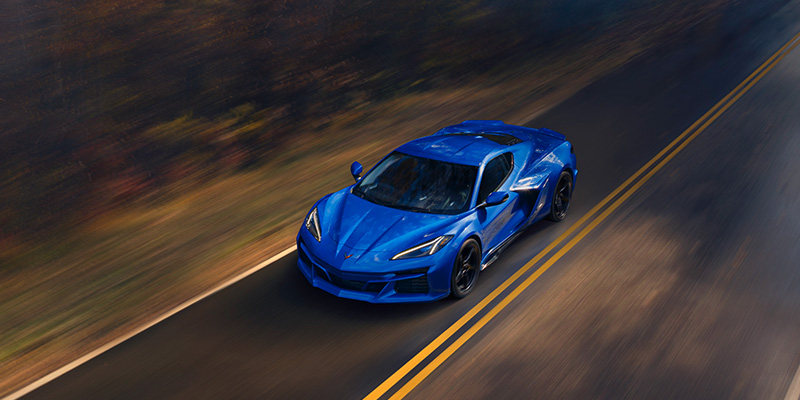
Understanding the E-Ray requires looking beyond combined horsepower figures and into how its hybrid and drivetrain systems interact in real driving.
Hybrid Architecture and System Layout
The E-Ray pairs a mid-mounted naturally aspirated V8 driving the rear wheels with a compact electric motor powering the front axle. There is no mechanical connection between the front and rear axles.
Key architectural elements include:
Read the rest of this entry »Ordering a 2026 Corvette is less about choosing a car and more about configuring a performance system. Unlike typical vehicles where trim alone defines character, the Corvette’s behavior is determined by how trims, powertrains, suspension packages, and aerodynamic options interact.
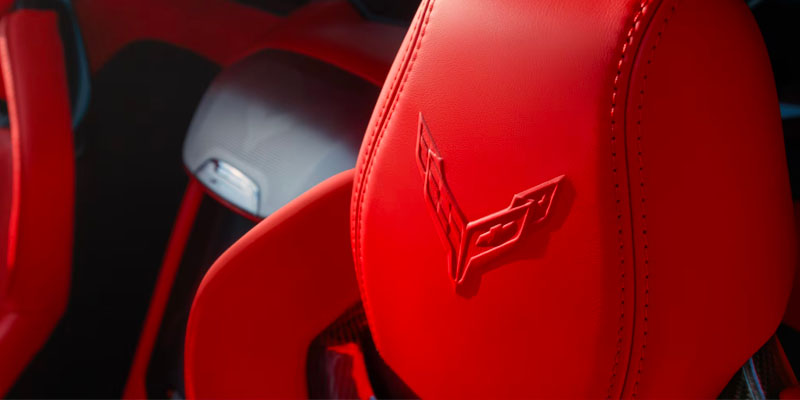
For performance-focused buyers, understanding how these elements stack together is essential to building a Corvette that aligns with real driving intent rather than surface-level specifications.
Corvette Trim Structure Explained
The Corvette lineup is organized around core trims that establish drivetrain layout and baseline capability. Each trim then supports multiple performance paths through package selection.
Primary Corvette trims include:
Read the rest of this entry »Connect with us
